
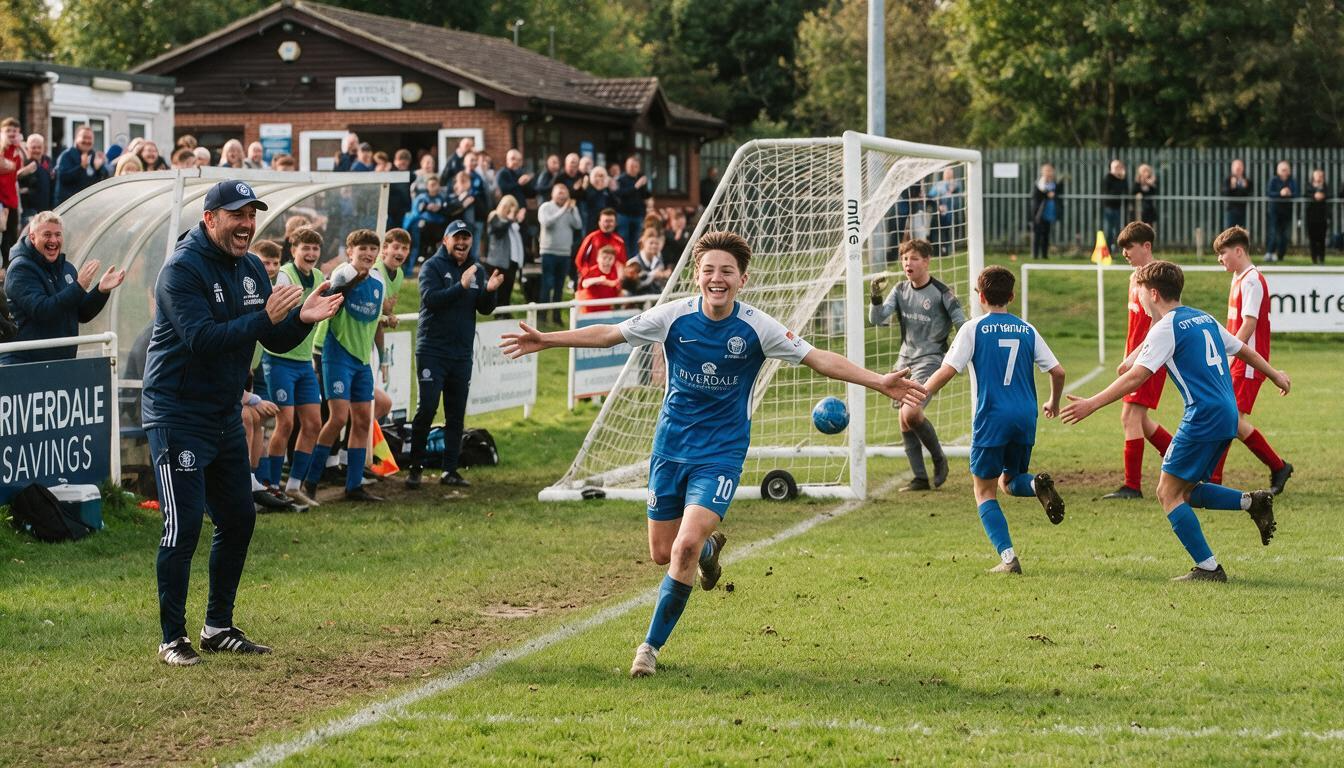
The FIFA World Cup 2026 is over. For the past several weeks, Canadian families watched matches in Toronto and Vancouver, children experienced the energy of a country hosting the world’s biggest sporting event, and youth soccer interest reached levels that most club directors have not seen before.
Now comes the harder question. How many of the children who discovered soccer this summer will still be playing two years from now?
Major international tournaments consistently produce participation surges. They also produce dropout waves six to twelve months later when the excitement of the tournament has faded and the participants who signed up because of the moment rather than because of genuine engagement with the sport start finding reasons not to return. The clubs that convert World Cup enthusiasm into lasting participation are not the ones that ran the best marketing campaign during the tournament. They are the ones that built a development pathway that gave new players a reason to keep going after the final whistle.
We have covered how to capture World Cup interest in our earlier blogs on inspiring young players and converting that interest into registration growth. This blog focuses on what comes next: building the development infrastructure that turns summer enthusiasm into multi-year participation.
Why Enthusiasm Alone Does Not Produce Long-Term Participation
A child who joins a soccer program because they were inspired by the World Cup brings enthusiasm, curiosity, and genuine excitement about the sport. What they do not bring is a reason to stay that will outlast the memory of the tournament.
For that reason to exist, the child needs to experience something within the program that is intrinsically motivating: a sense of progress, a growing sense of competence, a relationship with coaches and teammates that feels meaningful, and a visible pathway forward that tells them what comes next and makes them want to get there.
When these elements are present in a development program, participants who might have been casual joiners become committed members. When they are absent, the program is relying entirely on the enthusiasm that brought participants in, which fades naturally over time.
The structural question for a soccer club that captured enrollment during the World Cup period is whether its programs are designed to provide these elements or whether they deliver sessions that are enjoyable in isolation but do not produce the progressive sense of development that keeps participants engaged year over year.
 What a Structured Development Pathway Looks Like
A structured development pathway defines the skills athletes will work on at each stage of their involvement with the club, how progress through those skills will be measured, and what the pathway looks like from beginner entry point to more advanced participation.
For a youth soccer club, this means defining what a beginner player should be working on in their first season (basic ball control, simple passing, understanding of field positions, enjoyment of the game), what an intermediate player should be developing in their second and third seasons (more sophisticated technical skills, beginning tactical understanding, improved physical conditioning), and what the program offers athletes who want to continue beyond that.
The pathway does not need to be complex. It needs to be visible. Parents and young athletes need to be able to see where they are in the program and where they are going. That visibility is what produces the sense of progress that keeps people engaged.
Port Credit Yacht Club understood this when they adopted Checklick to address their retention challenges. The club needed to retain young sailors after their first seasons and reverse a slide in adult program enrollment. Parents wanted clearer progress updates. After adopting Checklick, staff used the platform’s built-in progression displays to show parents exactly where each participant stood in the program pathway. The outcome was greater transparency for families and boosted confidence in the club’s long-term pathway. Custom questions in the registration flow captured how every sailor heard about the club, turning that data into actionable marketing insights. The combination directly supported the retention outcomes the club was working toward. Read the Port Credit Yacht Club success story
The lesson for soccer clubs is direct: progress visibility is a retention mechanism. When parents can see what their child has learned and what they are working toward, they have a concrete reason to continue that a general sense of enjoyment alone does not provide.
How Athlete Tracking Connects to Parent Communication
The connection between athlete tracking and parent communication is one of the most underused retention levers available to youth sports clubs. Most clubs have evaluation data of some kind. Most parents want to know how their child is developing. But in most clubs, these two things are not connected in a way that makes progress visible to parents throughout the season.
When coaches evaluate athletes during sessions using Checklick on their phones or tablets, those evaluations are immediately visible to parents through the platform. No report needs to be compiled. No end-of-season summary needs to be prepared. The progress information reaches parents as a natural byproduct of coaching work that is already happening. See how Checklick’s athlete evaluation tools work
This means a parent who has a child in your soccer program can look at the platform any time during the season and see which skills their child has been working on, which ones they have completed, and where they are in the development pathway. That visibility answers the question most parents are privately asking throughout the season: is this working? Is my child actually getting better? Is this program worth continuing?
A parent who can see clearly that yes, their child has progressed from basic ball control to more complex passing skills and is ready to work on positioning in their next season has a specific, evidence-based reason to re-enroll. A parent who can only rely on a general impression from watching their child at practice has a much weaker basis for making that decision confidently.
Building for the Next Three Years, Not Just the Next Season
The clubs that will gain the most from the World Cup participation surge are not those that maximize enrollment in summer 2026. They are those that retain a significant proportion of the new participants they enrolled this summer through 2027, 2028, and beyond.
This three-year view changes how you think about program design. A child who joins your beginner program this summer needs a clear pathway into a second-year program next summer, a third-year program the summer after that, and eventually a competitive or recreational pathway that keeps them in the sport as a teenager and young adult. If your club can offer that complete pathway and communicate it clearly to families, you are not just filling spots for one season. You are building a cohort of participants who stay with your club for years.
Checklick supports this multi-season view by maintaining athlete records across seasons. When a child comes back for their second year, the coach can see their complete evaluation history from their first year and pick up exactly where they left off rather than starting from scratch. The development journey continues rather than restarting every September. See how Checklick’s multi-season athlete tracking works
What to Communicate to Families Right Now
The week after the World Cup ends is an important communication window. Families who enrolled their children in summer programs because of the tournament are now making decisions about fall and the following year. A specific, forward-looking communication from your club this week has a much stronger impact than a generic re-enrollment reminder in August.
The communication should do three things. It should acknowledge what their child accomplished this summer with specific reference to the skills they developed. It should describe clearly what comes next and what your club offers for participants at their child’s current level. And it should make re-enrollment easy with a direct link to the registration page and a clear deadline.
Checklick makes this communication specific because the data exists. Administrators can see exactly where each athlete completed the summer program and what they are ready for next. That specificity is what turns a generic communication into a compelling, personalized invitation to continue. See how Checklick’s Storefront makes re-enrollment easy
Frequently Asked Questions
How do youth soccer clubs keep new players engaged after the World Cup ends?
The key is structured athlete development programs that give participants a visible pathway forward, combined with regular parent communication about their child’s progress. When parents can see development clearly and understand what comes next, re-enrollment decisions are easier.
What is an athlete development pathway for a youth soccer club?
An athlete development pathway defines the skills athletes work on at each stage of their involvement with the club, how progress is measured, and what the progression from beginner to more advanced participation looks like. Making this pathway visible to parents and athletes is one of the most effective retention tools available.
How does athlete tracking software support long-term player retention?
When coaches evaluate athletes digitally during sessions and that data is visible to parents through a platform, parents have ongoing evidence of their child’s development throughout the season. That evidence gives them a specific, concrete reason to continue rather than relying on a general impression.
How far in advance should youth soccer clubs plan their fall programs?
Registration for fall programs should open as soon as the program details are confirmed. Families who enrolled during the World Cup period are making fall decisions now. A club that has fall registration open immediately after the summer season captures those families while the decision is fresh.
Start your free trial at checklick.com and build the development pathway that keeps the players who found you this summer coming back for years.
