

Understanding Athlete Evaluation Software
Athlete evaluation software is a digital system that sports clubs use to assess athlete performance in a structured and consistent way.
It replaces paper forms, handwritten notes, and scattered spreadsheets with one centralized evaluation process.
At its core, this type of software helps clubs record observations, apply consistent criteria, and track athlete development over time.
Instead of relying on memory or isolated files, clubs create a clear history of each athlete’s progress.
In 2026, this approach is becoming standard for clubs that care about development, fairness, and transparency.
Why Athlete Evaluations Matter More Than Ever
Athlete evaluations are not just an internal task for coaches.
They shape training decisions, influence athlete confidence, and affect how parents understand development.
When evaluations are informal or inconsistent, progress becomes hard to explain.
- Athletes receive mixed messages
- Parents struggle to see improvement
- Coaches lack clear reference points
Structured evaluations give clubs a shared language for development and performance.
How Evaluations Are Often Handled Without Software
Many sports clubs still evaluate athletes using methods that worked in the past.
These include paper score sheets, notebooks, printed rubrics, or spreadsheets saved on personal devices.
While familiar, these approaches create gaps.
- Evaluation records are difficult to find
- Past results are rarely reviewed
- Different coaches often apply different standards
Over time, this leads to confusion rather than clarity.
The Long-Term Cost of Manual Evaluations
Manual evaluation slowly loses effectiveness as clubs grow.
- Clubs struggle to compare past evaluations across seasons
- New coaches have no visibility into prior assessments
- Admin staff spend time organizing records instead of supporting programs
The result is lost insight into athlete development and increased operational effort.
What Athlete Evaluation Software Changes
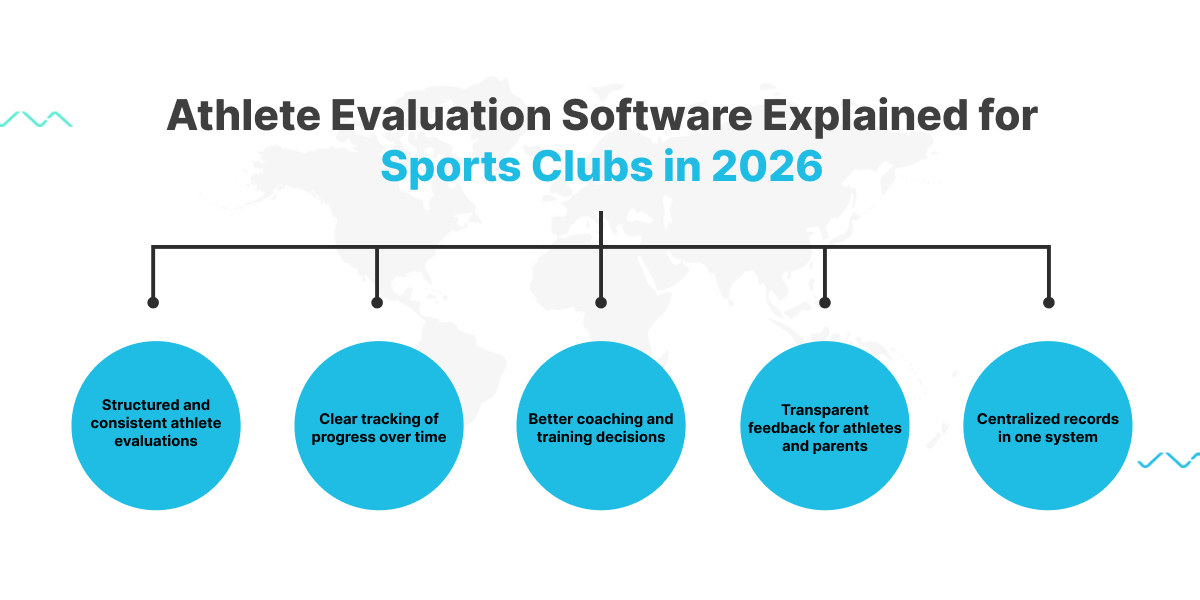
Athlete evaluation software introduces structure into the evaluation process.
Clubs define evaluation criteria once and apply them consistently.
Evaluations are recorded digitally and stored with athlete profiles.
Historical results remain available for review and comparison.
This creates a repeatable system rather than a series of isolated assessments.
Consistency Across Coaches and Evaluators
Consistency is one of the most important outcomes of evaluation software.
When clubs rely on digital checklists, every evaluator follows the same framework.
This reduces subjective grading and aligns expectations across coaches.
Consistency matters not only for fairness but also for long-term development tracking.
When criteria remain stable, progress becomes measurable.
Tracking Development Over Time
Athlete development does not happen in a single session or season.
Evaluation software allows clubs to observe progress across months and years.
- Trends become visible
- Improvement can be documented
- Setbacks can be addressed early
Without a digital record, this long-term perspective is almost impossible to maintain.
Supporting Better Coaching Decisions
Coaches benefit from having access to structured evaluation data.
Instead of relying on memory or notes, they can review past assessments before planning sessions.
This helps tailor training to individual needs and group patterns.
Better data leads to better decisions without adding extra admin work.
Transparency for Athletes and Parents
Transparency is critical in modern sports clubs, especially in youth programs.
When evaluations are stored digitally, clubs can share clear and consistent reports.
- Parents understand how progress is measured
- Athletes see where they are improving and where they need work
This clarity builds trust and reduces misunderstandings.
Where Checklick Fits
Checklick is built around structured athlete evaluations for sports clubs.
The platform supports digital evaluation checklists, progress tracking, and centralized reporting.
Checklick helps clubs move from informal evaluation habits to a structured system that supports development.
