

Somewhere in a sailing club right now, there is a twelve-year-old who just figured out how to tack without losing momentum. They probably do not know it yet, but that moment is the beginning of something. What happens in the years that follow – whether their progress is tracked, whether their achievements are recognized, whether their development path is clear to them and to their instructors – will determine how far that beginning takes them.
The athletes who competed at the 2026 Milan-Cortina Winter Olympics did not emerge fully formed from a training camp. They started exactly where your participants start: in a beginner class, at a community club, with a coach who was deciding how much attention to give them and where in the curriculum to place them next. The clubs that tend to produce the athletes who keep going, who improve consistently, who develop a real and lasting relationship with their sport, are the ones that took that early development seriously.
Taking development seriously does not require an Olympic budget. It requires a system.
What Structured Development Looks Like in Practice
In a club with a strong development culture, every athlete’s journey is documented. Their first assessment is on record. Each skill they demonstrate competency in is checked off. Each level they complete generates a certificate that belongs to them and confirms what they have achieved. Their coach can pull up their record at any time and see exactly where they are in the program without asking anyone or searching through paperwork.
This is not the exception in well-run clubs. It is the standard. And it makes a measurable difference. When athletes can see their own progress visually, they are more motivated to continue. When parents can see exactly where their child stands in the program pathway, they are more likely to re-enroll. When instructors have real-time access to each student’s records, they teach more effectively because they are not guessing at prior knowledge.
Port Credit Yacht Club uses Checklick to show parents exactly where each participant stands in the program pathway, using built-in progression displays. That transparency became one of the club’s tools for retaining young sailors after their first seasons, which had previously been one of the club’s most persistent challenges. This is what structured development tracking does in practice: it turns a good program into a program that participants can see is good.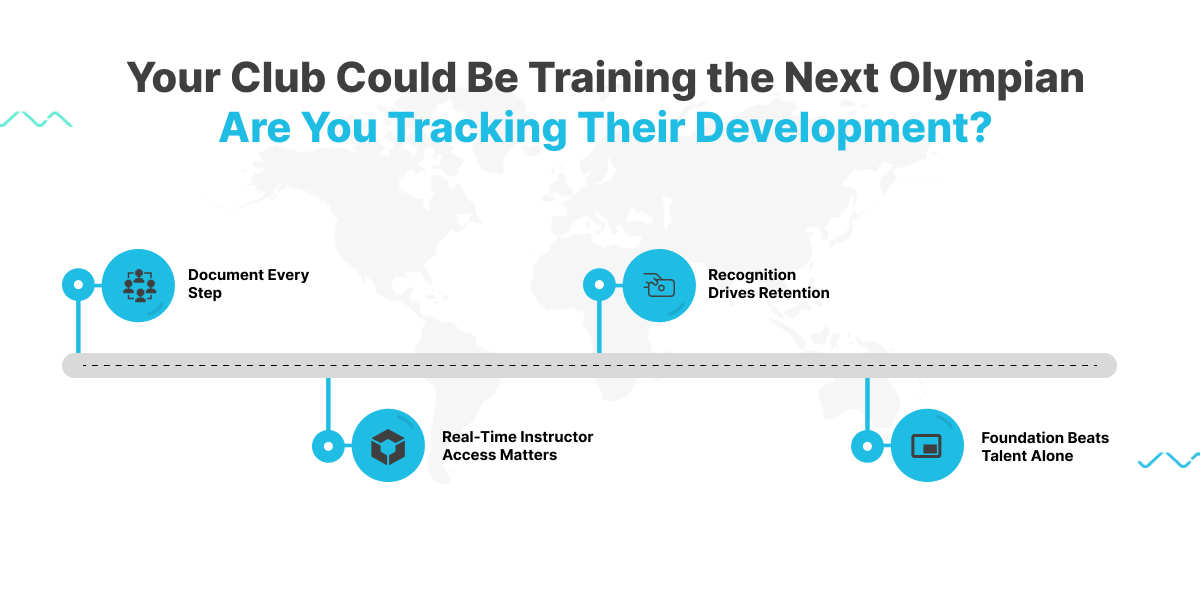
The Role of Real-Time Instructor Access
One of the most practically significant features of a digital athlete development system is real-time instructor access. In a sailing program, instructors may change between sessions, between weeks, or between seasons. In a judo club, different coaches may work with the same athlete in different contexts. Without a shared, real-time record of where each athlete stands, every instructor is starting from a partial picture.
When instructors can access current class rosters and progress records directly, without manual updates or waiting for someone to forward a spreadsheet, they walk into every session knowing what their athletes have already completed and what comes next. This makes the instruction better. It also makes the athlete’s experience more consistent, because they are not being assessed against different mental models by different coaches.
At West Hawk Lake Yacht Club, one of the outcomes from implementing Checklick was that instructors got instant access to updated class lists, contributing to a more professionally run club that participants found more credible. At Starlight Sailing Adventures, real-time instructor access was part of a broader shift to digital certifications that gave the school a more polished and professional image.
Recognition as a Development Tool
Frequent athlete evaluation is not just about data collection. It is about communication. When a young athlete completes a level and receives a digital certificate, that moment of recognition matters. It says: your effort is seen, your progress is real, and what you have accomplished has been confirmed. For young participants especially, this kind of structured recognition is a powerful motivator.
Clubs that deliver consistent, formal recognition for development milestones tend to see stronger participant retention. Families who receive a professional digital certificate confirming their child’s CANSail level completion, for example, are more likely to view the club as a serious, high-quality program worth continuing with. The certificate is not just administrative confirmation. It is a piece of the club’s relationship with its participants and their families.
Checklick allows clubs to send progress updates and digital certificates directly to participants and parents, creating that recognition loop automatically as part of the evaluation process. This is one of the features that contribute to program growth at Gimli Yacht Club, which noted program expansion as a direct outcome alongside the time savings from streamlined registration.
Building the Foundation That Elite Development Requires
Not every participant in a youth sailing program will go on to compete internationally. But the ones who do will look back at their early development and point to the clubs and programs that gave them a solid foundation. That foundation is not built with expensive equipment or elite coaching alone. It is built with consistent, documented, stage-by-stage skill development that gives athletes the technical base and the confidence to keep progressing.
Checklick’s Athlete Development Tracking System is built specifically for sports clubs that run structured programs. It supports customizable skill matrices aligned to each club’s program framework, mobile-first evaluation so coaches can assess and record on any device, digital certification that travels with the athlete, and real-time reporting that gives program coordinators a clear picture of development across the entire participant base.
Hundreds of sports clubs trust Checklick to manage athlete development with powerful, intuitive tools. The platform is available with a 30-day free trial, with an evaluator plan at $15 per month for clubs with fewer than 50 evaluators. For clubs with larger programs or more complex needs, a managed services option provides dedicated implementation support.
The next Olympian might be in your program right now. Whether or not they ever make it to an Olympic starting line, they deserve a development experience that is intentional, visible, and well-documented. That is what good clubs provide. And that is what the right system makes possible.
Start building your development system today. Try Checklick free for 30 days at checklick.com.
