

As sports clubs prepare for the 2026 season, many are evaluating their tools and processes for athlete development. One of the most important decisions a club can make is choosing the right athlete evaluation software, a platform that helps coaches track progress over time, organize evaluation data, and support coaches, athletes, and parents.
When selecting evaluation software, it’s essential to focus on features that truly support your club’s day-to-day needs. Below, we outline what sports clubs should look for before 2026 and how Checklick fulfills those needs based on its published functionality.
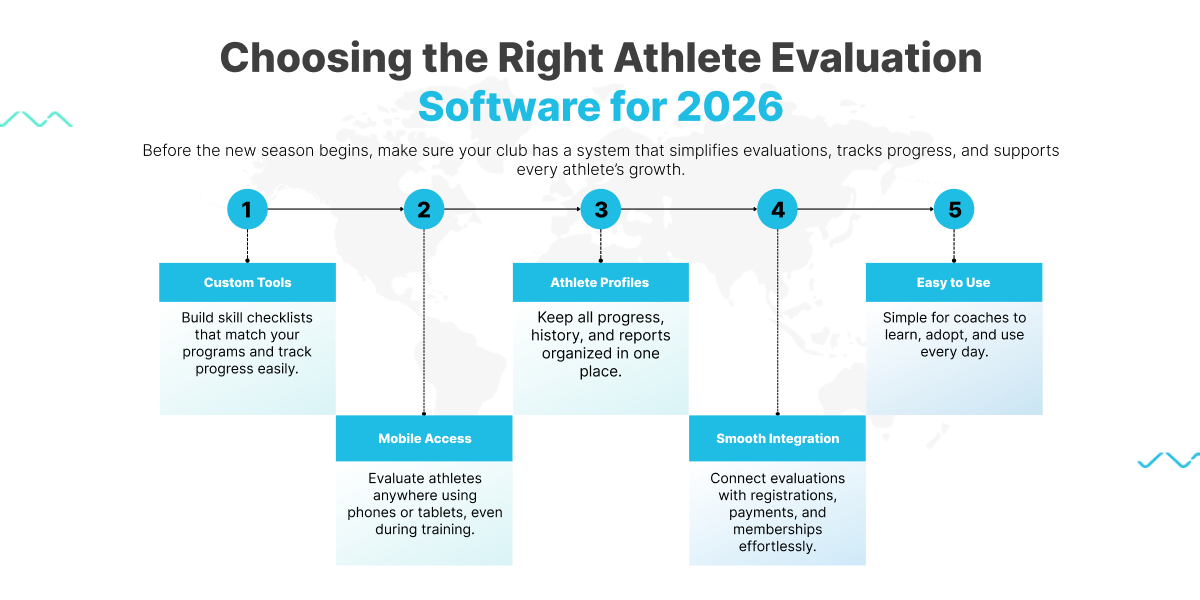
1. Clear, Customizable Skill Evaluation Tools
At the core of athlete evaluation software is the ability to record and monitor skills consistently across multiple sessions. Good software should let your club:- Create custom skills matrices tailored to your sport or program
- Assign evaluation criteria that match your club’s development goals
- Record progress in a way that’s clear for coaches to review later
2. Mobile-Friendly Access for On-the-Go Evaluation
Field coaches need tools that work where they work, not just at a desk. The best athlete evaluation software should:- Be accessible on phones and tablets
- Allow coaches to record evaluations during training or after sessions
- Sync progress back to central athlete records
3. Organized Athlete Profiles and Progress Tracking
Evaluations are only useful if they tie back to individual athlete records. Sports clubs should choose software that:- Stores athlete evaluation history in one place
- Keeps performance data attached to each athlete
- Makes it easy to see progress over time
4. Communication with Coaches, Athletes, and Parents
Evaluation software should support communication so performance data doesn’t stay buried in a spreadsheet. Look for tools that allow:- Clear sharing of progress with athletes and families
- Simple updates to coaching staff
- Stakeholders to see what skills have been assessed
5. Integration With Club Operations
Separate evaluation tools can create extra work when your club also needs to manage registrations, payments, and memberships. Checklick includes:- Digital evaluation tools
- Member registration and onboarding
- Integrated Storefront for selling courses, memberships, and events
- Tools to track athlete participation alongside performance data
6. Analytics That Support Decisions
While deep analytics aren’t always necessary, clubs benefit when software helps them understand trends. Good athlete evaluation software should:- Compare evaluation data over time
- Highlight performance patterns
- Support planning of training and program improvements
7. Consistent and Organized Evaluation Templates
Clubs often run multiple programs from youth development leagues to advanced training. A strong athlete evaluation solution should let you:- Use consistent templates across programs
- Apply the same evaluation structure club-wide
- Ensure evaluations are not fragmented or inconsistent
8. Ease of Use for Coaches and Staff
Software that’s hard to use becomes a burden, not a benefit. Prioritize evaluation tools that:- Are easy for coaches to learn and use
- Do not require complex training before implementation
- Provide intuitive interfaces for daily tasks
Choosing Evaluation Software Before 2026
As sports clubs plan for the next season, choosing the right athlete evaluation software can make a real difference in how you develop athletes, manage data, and support your staff. Clubs should look for software that:- Offers customizable evaluation tools
- Supports mobile access
- Organizes athlete profiles and data
- Integrates with club operations
- Includes analytics to support decision-making
- Uses templates for consistent evaluations
- Is easy for coaches and administrators to adopt
